Why Cubicle Curtains Count as Soft Surfaces in Infection Control
Bed rails get wiped every day; the fabric hanging beside the bed often goes months without a wash.
October 27, 2026 · 3 min read
Walk through a patient room with an infection prevention mindset and you'll see a pattern in what gets attention. Bed rails, call buttons, tray tables and door handles are hard surfaces, and they're on the cleaning list. The curtain beside the bed is a different category. It's fabric, it's large, it's touched constantly, and it's rarely on the same list.
What a soft surface does
Hard surfaces can be wiped. Soft surfaces can't be wiped in the same way, and fabric holds what lands on it. Accord Curtains makes the point on its own Soft Surface Sanitation page: soft surfaces trap dust, bacteria and other contaminants, in hospitals, outpatient centers and nursing homes alike.
A cubicle curtain also sits in the middle of how care happens. Staff push it aside on the way in and pull it closed on the way out, often with gloves on and a task still in mind. Patients and visitors reach for it as well. Over weeks, the part of the fabric at hand height is the part that has been touched the most.
The gap in common practice
Accord describes the standard practice in many facilities as cleaning curtains only when they're visibly soiled, or after an isolation discharge. The problem with a visual trigger is that a curtain can look fine and still be well overdue. Dust, skin cells and other soil don't always show on a patterned fabric, and plenty of curtains are never routinely cleaned at all.
That is Accord's description of the industry, not a finding from a study of your hospital. Your facility may have a stricter rule. The useful exercise is to check. Ask when the curtains in your three busiest units were last changed, and see whether anyone can answer without guessing.
Putting the larger numbers in context
Accord Curtains cites the CDC estimate of 687,000 healthcare-associated infections in U.S. acute care hospitals in 2015. That figure is about the whole problem of healthcare-associated infection. It does not say that curtains caused any particular share of those cases, and nobody should read it that way.
What it does is explain why infection control teams look at every surface a patient is near, including the ones that are easy to forget. A curtain is one item on a long list, and it's one of the few where the answer is a straightforward scheduling decision rather than a new procedure.
Making curtains part of the program
Moving curtains from a reactive item to a managed one comes down to a few moves, none of them complicated.
- Count them. An inventory of every curtain and room gives you a baseline to work from.
- Pick a rhythm by unit. Busy acute areas and quiet clinic bays don't need the same schedule, and Routine Scheduled Cleaning can run bi-annually, quarterly, monthly or weekly.
- Plan for isolation separately. On-Call Isolation Discharge Cleaning exists because a discharge doesn't wait for the next scheduled date.
- Keep a record. Barcode each curtain and scan it on every take-down and re-hang, so date, time, employee and room are on file.
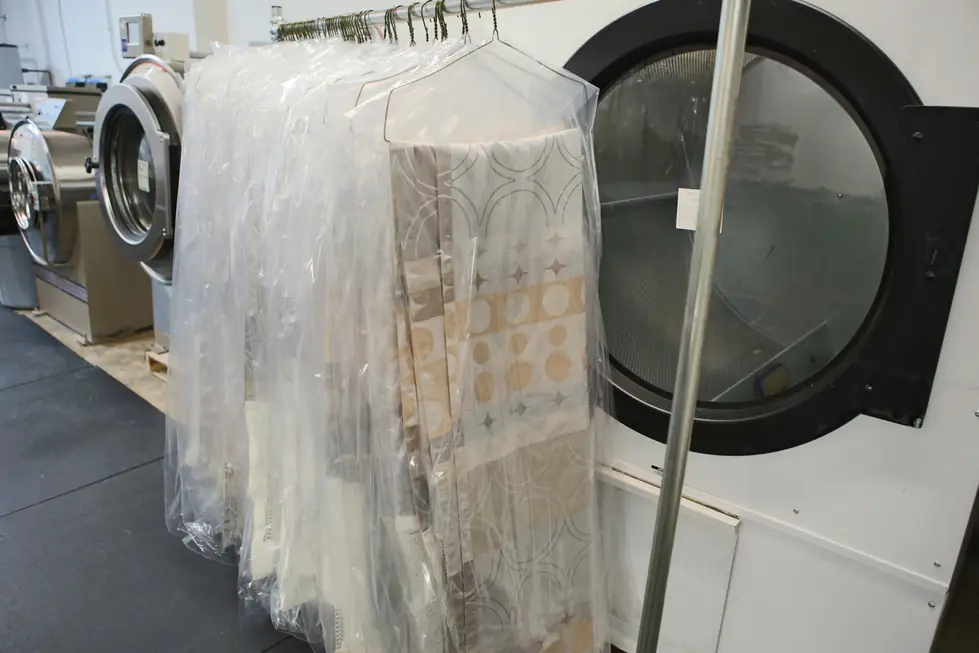
For facilities that handle their own take-downs, Pick Up Take Back covers the laundering side: Accord collects the curtains you've already removed and returns them washed, dried and ironed, wrapped in plastic protection with hangers.
A plain-spoken conclusion
Nobody can promise that cleaner curtains will change a given outcome, and a vendor who tells you otherwise deserves a follow-up question. What you can say with confidence is narrower and more useful. A curtain is a soft surface. It sits within arm's reach of a patient. Deciding when it gets cleaned, and keeping a record of the decision, is a choice your facility either makes on purpose or lets happen by default.
Accord has been cleaning curtains for hospitals since 2008, and the company reports serving over 140 customers. If you'd like to find out where your own curtains stand, call (614) 340-9900 or email info@accordcurtains.com to book a curtain inventory.
Accord Curtains, (614) 340-9900
Call (614) 340-9900More articles
How Often Should Hospital Privacy Curtains Be Cleaned?
One schedule for the whole building is easy to write and usually wrong, so start from how each unit actually uses its curtains.
What Happens to the Curtains When an Isolation Room Is Discharged?
The patient leaves, the room gets reset, and the cubicle curtain is the one item that waits for someone with a ladder.