What Happens to the Curtains When an Isolation Room Is Discharged?
The patient leaves, the room gets reset, and the cubicle curtain is the one item that waits for someone with a ladder.
October 27, 2026 · 3 min read
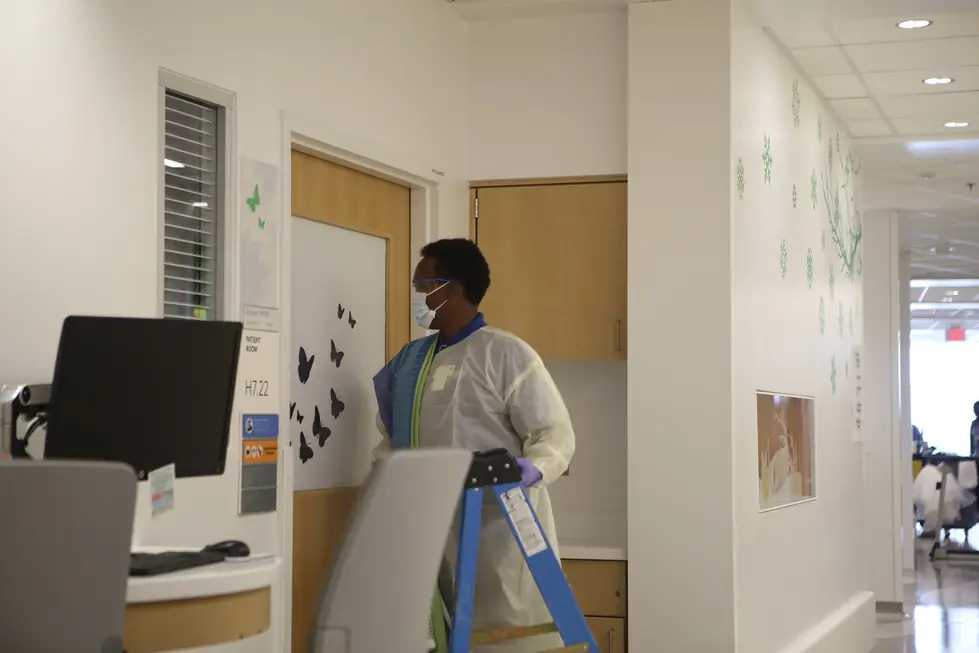
The patient in the isolation room goes home, or moves to another unit, and suddenly that room is the busiest place on the floor. Linen comes off, surfaces get wiped, the bed is stripped and reset. The cubicle curtain hangs there through all of it, because replacing it takes a ladder, a clean spare and someone with the time. In many facilities it's the last item anyone reaches, and sometimes it isn't reached at all.
Why the curtain is the awkward item
Environmental Services crews are built around floors, fixtures and horizontal surfaces. A ceiling-mounted curtain is a different kind of job. It has to come down off a track, leave the room without being shaken around, and be replaced with something clean before the next patient arrives. If your own staff does it, that means a ladder trip, a walk to wherever soiled linen goes, and a search for a spare in the right size. How a compromised curtain is handled is set by your infection control policy, and it varies from one facility to the next.
Accord Curtains built On-Call Isolation Discharge Cleaning around that gap. It's meant for curtains compromised by a patient with a highly transmissible illness. Uniformed installers are on site or nearby, ready to take the call, and the aim is the fastest possible removal and cleaning. Accord began the service in 2013. In 2020, during COVID-19, it added isolation curtain room pickup for an Ohio hospital system.
What the call and the visit look like
The exact sequence depends on your policy, but an on-call visit tends to follow a recognizable shape. Your protocol decides the details of each step. In Accord's own photos, installers enter isolation rooms in mask, gown and gloves, carrying a ladder.
- A charge nurse or Environmental Services lead calls with the building, unit and room number.
- An installer arrives dressed to your protocol, with a ladder and clean replacement curtains.
- The used curtains come down and go straight into whatever containment your policy calls for, instead of being carried down the hall loose.
- Clean curtains go up on the same ceiling track, and each is scanned so the record shows the date, time, employee and room.
- The room goes back to Environmental Services for any final steps your policy requires.
That scan at the end is easy to skip past, but it's the part that lets you prove the curtain was actually changed. Without it, the only evidence is somebody remembering that it happened.
Handing responsibility over cleanly
Accord's own description of the service is that it lets Environmental Services hand over responsibility for isolation curtains. That only works if the handoff is defined in advance. A few questions are worth settling before the first discharge, not during it.
- Who is allowed to place the call, and is the trigger the discharge order or the end of the terminal clean?
- What does the caller say? Building, unit, room and bed at a minimum, plus anything about access.
- Where does the phone number live? The best answer is on the room-turn checklist itself, not in a binder.
- What happens on nights and weekends? Ask about after-hours coverage when you set up the program, and write down the answer you get.
Keeping the bed usable while it waits
A room held for a curtain is a bed you can't fill. Spare curtains shorten that wait. Accord says it keeps spare curtains it can install, so a room doesn't sit empty while the discharged set is out being cleaned. Sizes matter here. At the inventory visit, note which rooms have unusual track lengths or drops, so the right spare is already on the truck when the call comes.
Pairing on-call with a routine schedule
On-call service covers the exceptions. Routine Scheduled Cleaning covers everything else. A facility that runs both can answer a plain question: which curtains changed after an isolation discharge, and which haven't been touched since the last scheduled round? Because every curtain is barcoded through ACTS, that answer comes from a report instead of from a walk-through with a clipboard.
It also helps your own team. Environmental Services staff already carry a long task list for every room turn. Taking the ladder work off it doesn't reduce what they do. It removes the one item that most often gets postponed.
If you'd like to see how an on-call arrangement would work in your building, call Accord Curtains at (614) 340-9900 or email info@accordcurtains.com to book a curtain inventory.
Accord Curtains, (614) 340-9900
Call (614) 340-9900More articles
How Often Should Hospital Privacy Curtains Be Cleaned?
One schedule for the whole building is easy to write and usually wrong, so start from how each unit actually uses its curtains.
What a Curtain Barcode Record Should Actually Tell You
A curtain with a barcode but no usable record is still a curtain nobody can account for.